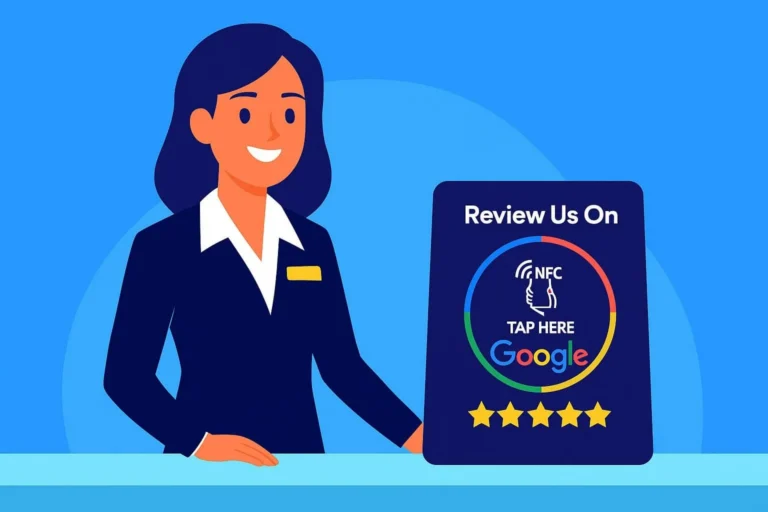
Turn Guest Feedback into Better Hospitality and Stronger Booking Trust
Create an owner-led guest-feedback process for monitoring, honest review requests, thoughtful replies, verified service improvements and trustworthy content.

A useful guest-feedback process does three things: notices what guests are saying, responds appropriately and turns repeated themes into real improvements. Reviews can support trust and booking decisions, but they are not a guaranteed revenue formula.
This owner-facing guide combines our feedback strategy and earlier review-management checklist. It covers the workflow around reviews; the Booking.com and Tripadvisor response guide provides platform context and illustrative replies.
1. Give the process a named owner
Decide who checks feedback, who can reply and who handles a sensitive issue. A small property may need only a simple shared register and a regular review time. A larger operation may need a dedicated tool, but software does not replace responsibility.
Include the relevant booking and review platforms, website enquiries and useful social mentions. The earlier checklist also recommended noticing independent blog coverage. Acknowledge genuine coverage appropriately, without assuming that a review or public image can be reused without permission.
Keep account access secure and limited. Do not share administrator passwords broadly or give an outside tool more access than its task requires.
2. Monitor the places your guests actually use
Check Google, relevant OTAs, Tripadvisor and other channels with meaningful activity for your property. Use notifications where useful and confirm that they reach the responsible person.
Log the date, platform, broad theme, response owner and next action. Avoid copying unnecessary personal data into a widely shared document. Keep service concerns linked to restricted evidence when the investigation requires more detail.
Prioritise urgent safety, privacy or serious service matters. Do not let an attractive overall star rating hide a recurring operational problem.
3. Respond with care and authority
Thank the guest, address the actual point and explain a truthful next step. Be specific without disclosing reservation or personal details. Acknowledge mixed feedback rather than only responding to praise.
Investigate criticism before claiming it is resolved. A promised repair, refund or complimentary stay needs the appropriate authority. Never condition a remedy on a positive review or the removal of criticism.
Set an internal response target your team can meet, allowing time for sensitive issues. A quick but inaccurate reply is not better service. Keep draft, submitted, moderated and publicly visible responses as distinct states.
If a review appears to concern the wrong property or breach a platform’s current rules, preserve relevant evidence and use that platform’s authorised reporting process. Disagreement or an unfavourable score is not by itself proof of a violation. Continue to handle the underlying service concern appropriately, keep personal details out of public replies and do not promise removal. Check the actual platform outcome rather than treating a submitted report as a removed review.
4. Ask for honest feedback without filtering it
A brief, appropriate post-stay request can make feedback easier. Use a clear link or QR code, identify the destination and allow guests to decide whether to participate. Follow communication preferences and the platform’s rules.
Do not offer discounts, gifts, free nights or competition entries for reviews. Do not send satisfied guests to Google while diverting unhappy guests into a private-only route. Google’s published policies prohibit incentivised reviews and selective solicitation of positive reviews.
A private service check during the stay can help resolve a problem, but it must not become a mechanism to suppress public criticism. Requesting honest feedback and offering a good recovery experience are compatible without bargaining over a rating.
5. Analyse themes rather than chasing only the score
Group feedback into useful subjects such as arrival, cleanliness, sleep quality, breakfast, service, value and the accuracy of online information. Note how often a theme appears and whether it is recent, recurring or linked to a particular room or period.
Check the underlying comments before drawing conclusions. Several comments about Wi-Fi may mean poor coverage in one room, unclear expectations or an outage; they do not establish the cause on their own.
AI can help organise an approved, appropriately anonymised set, but sentiment labels and summaries need review. Do not feed sensitive guest records into an unapproved public tool. Keep operational findings separate from speculative explanations.
6. Turn feedback into an operational action
For each recurring issue, name an owner, an action and a review date. Confirm what was actually changed. Updating arrival instructions, correcting a room description or fixing a maintenance fault is more meaningful than writing a more polished apology.
Look at the whole guest journey. Pre-stay questions can reveal unclear information; in-stay conversations can expose immediate needs; post-stay reviews can show whether the promise matched the experience.
Do not publicly announce that an issue has been fixed until that is verified. Keep serious matters with the responsible manager and seek qualified assistance when appropriate.
7. Use genuine strengths in the website and content
When guests repeatedly value something real, explain it clearly in your own content. A comment about peaceful gardens may support a page about the setting; praise for a helpful arrival may inform your pre-stay information.
If quoting a review, preserve its meaning, attribute it accurately and respect applicable permissions and platform terms. A selected positive excerpt is not the full distribution of guest feedback. Do not present a curated testimonial slider as an independent live aggregate of every review.
Keep ratings current and specify the source and review count when showing an aggregate. Do not invent a score or use review schema simply to try to generate stars in search. Use lightweight website displays and measure their cost before adding several third-party widgets.
8. Choose tools only when the workflow needs them
A review platform may consolidate notifications, themes or drafts. Verify the current integrations, permissions, pricing and response capabilities with the supplier. A product name alone does not establish that it can post to every channel.
Keep a human approval step for public responses, especially complaints. The tool must not fabricate an action, expose private information or publish an unauthorised commitment. Consider whether a basic internal routine would solve the problem without another subscription.
Review progress with a balanced scorecard
- Coverage of the channels that matter to your guests.
- Time to review and appropriately respond to new feedback.
- Recurring themes and the number of verified fixes.
- Accuracy of website promises and listing information.
- Guest enquiries, bookings and cancellations, without claiming reviews alone caused the change.
TMSA’s role is to help accommodation brands communicate genuine value through booking-focused websites, Google and AI search visibility, paid advertising and content marketing. We do not offer ongoing review management as a separate service. The property retains ownership of guest feedback and service recovery.
For the wider booking journey, see our direct-booking strategy and booking-button checklist.
A clearer path to more direct bookings.
Bring your website, search visibility, advertising and content together around your accommodation brand.